Zoroaster was the first known person to interpret and teach the doctrines of light and dark as metaphors for truth and falsehood, “heaven and hell”, the “last judgment”, and the “everlasting” states of the reunited mind, body, and soul. These doctrines—which for the purpose of this blog I prefer to call concepts—became recognizable and significant interpretations of faith to much of mankind, evidently inspiring Judaism, Christianity, and Islam.
The themes in the Gathas have inspired themes in the world’s three major religions, and even a rudimentary understanding of any of the three faiths will prompt immediate recognition of the great similarities in the fundamental themes of these religions and the fundamental themes of Zoroastrianism. In the Torah, the Bible, and the Qur’an, most general messages, doctrines, concepts and so forth revolve around the themes of good and evil, cleanliness and impurity, righteousness and wickedness, life and the afterlife—that constitute the teachings underlined in the Gathas.
Even routine practices, still implemented currently, seem to be inspired by practices explained in the Gathas, and there are two examples which immediately came to my mind while reading the course material. Firstly, in the Jewish faith, one cannot blow out a lit flame, but rather let it burn until the flame dies out naturally. Secondly, in the Muslim faith, one must wash before entering a place of worship, and before beginning prayer. I had never realized the overwhelming significance of Zoroastrianism before…!
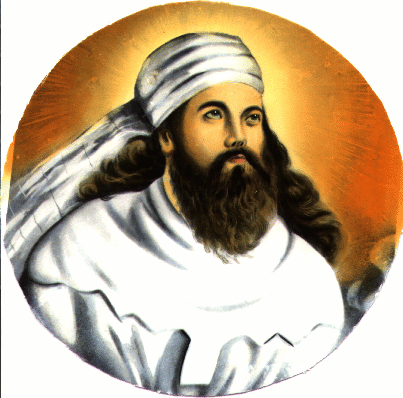
Interpretive image of Zoroaster. Dare I say, note the similarity between this image of Zoroaster and the modern image of Christ?


No comments:
Post a Comment